Park Features
The park offers a variety of features and environments for all ages. Much of the park is managed to encourage wildlife and we ask that park users respect the all the creatures and plants that live there.
Geography
The park is spread over a wide area and is an unusual shape, in addition the Friends of Trendlewood Park also tend two area of the Golden Valley Playing Fields. The interactive drone imagery below give an overview of the park grounds.
Access Points
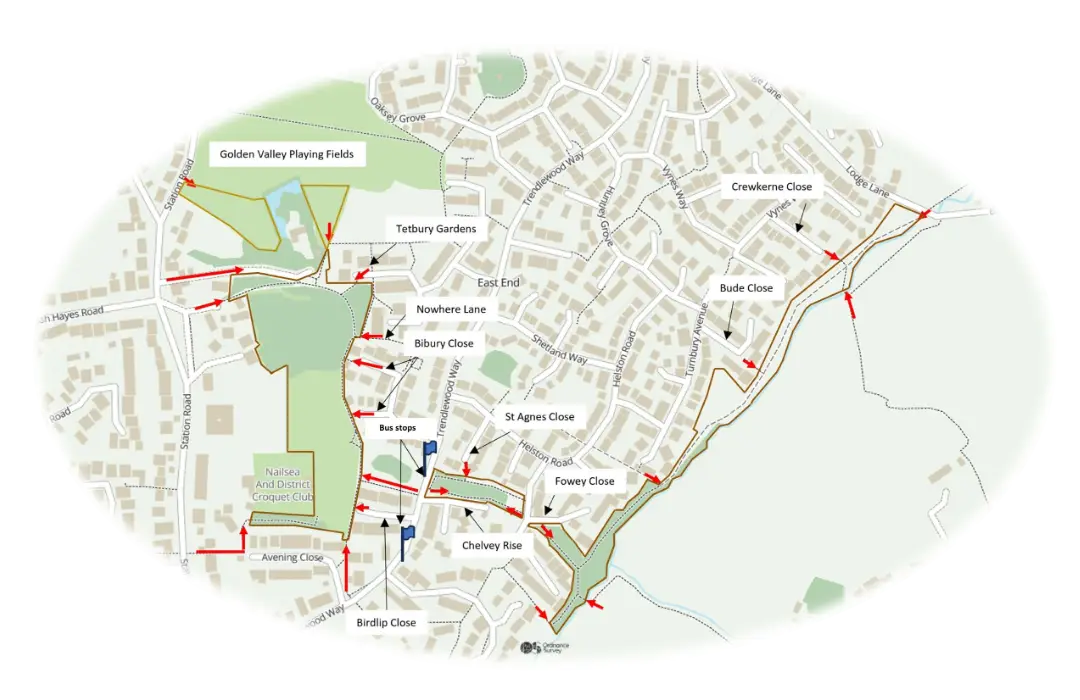
There are multiple points of access into the park, see the map.
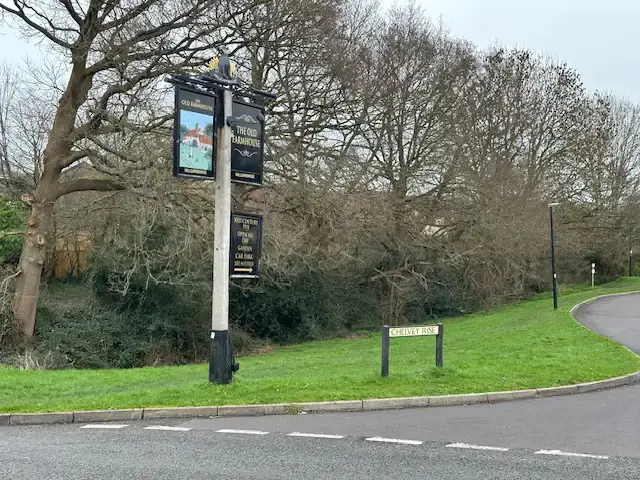
There are two bus stops in Trendlewood Way close to The Old Farmhouse public house.
These are shown in the map as blue flags and are served by the X7 and X7A Nailsea to Bristol bus service.
The park does not have a car park, but parking spaces can often be found in Chelvey Rise or near by residential streets.
Several public footpaths and a bridleway cross the park, see the map. There are also many permissive paths in and around the park.
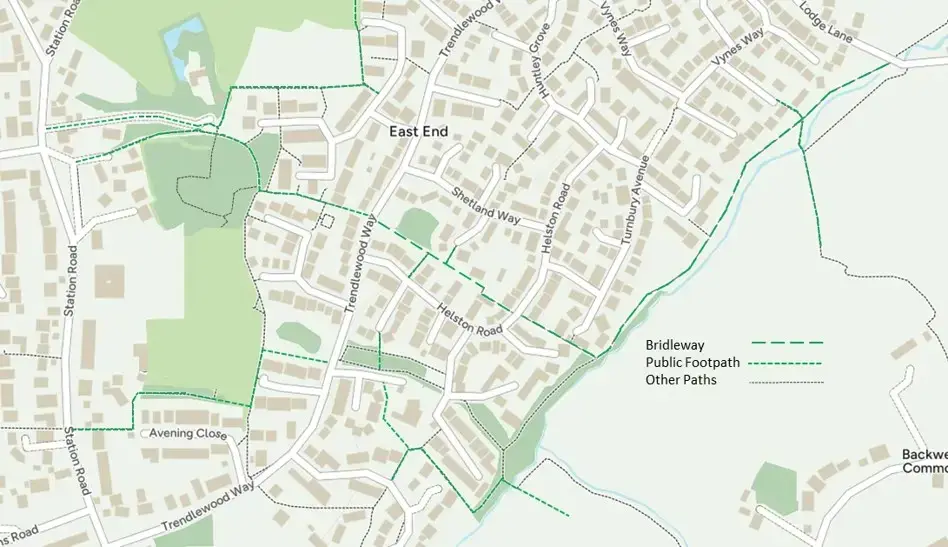
© Crown copyright 2024 Ordnance Survey. Media 041/24.
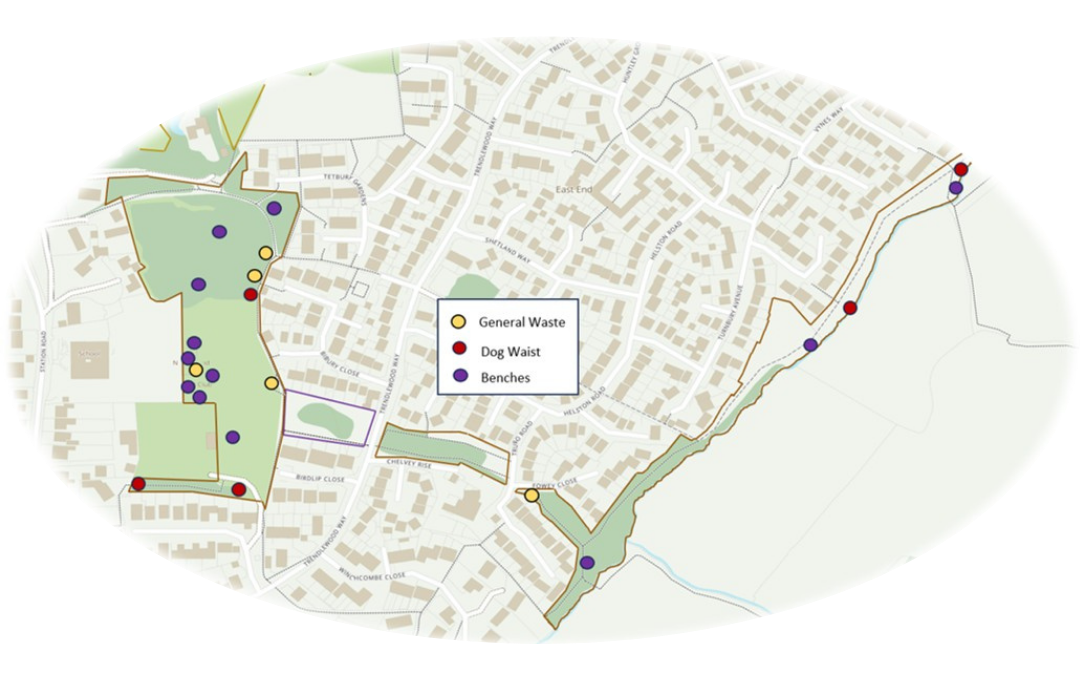
Benches and Bins
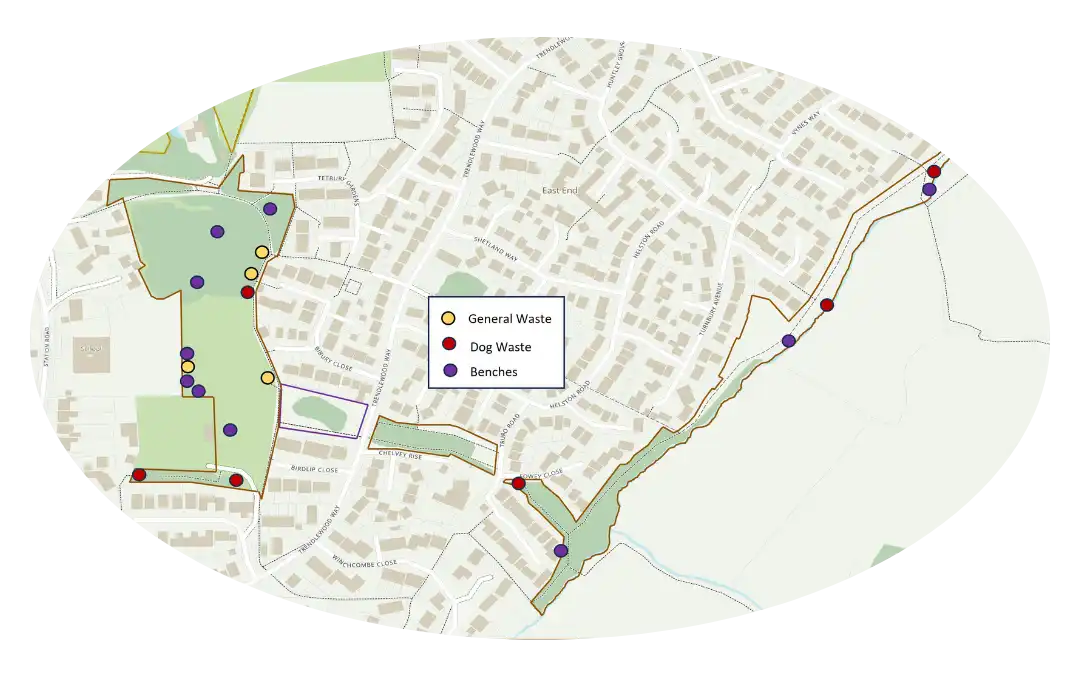
The park has several benches for the weary to sit on and enjoy.
There are also litter bins and dog waste bins.
Children’s Play Area
The children’s play areas are most easily accessed from Avening Close, Birdlip Close or Bibury Close, See the map
The play areas include a fenced off dog free play area with a soft surface for younger children. In the play area are swings for young children, and slides. Outside of the fenced off play area are two picnic tables with seating. Close by there is equipment for older children including a zip wire, a large climbing frame with netting, a set of activity poles, a large swinging platform and several benches to sit on.
Wetland Area
Nowhere Wood
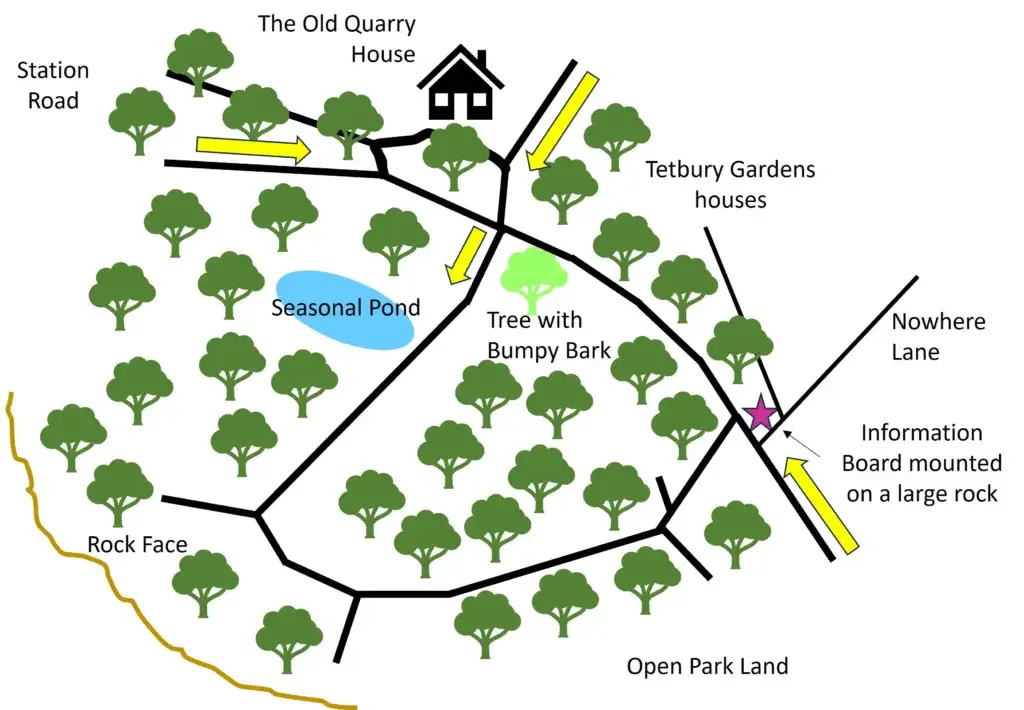
The wood can be accessed from two lanes off Station Road, one is a public footpath and the other is a path signed posted to Trendlewood Park. The public footpath has an information board on a Pennant Sandstone plinth at the entrance to the woods, this tells the history of the local area. The wood can also be reached from within the park near to the Nowhere Lane access point where there a noticeboard set into a large rock. The noticeboard includes a map of the paths and outlines the wildlife that can be found in the wood. There is also a path from Golden Valley Playing Fields. There are some benches in the woods for those wanting to take a break.
The wood is on the site of a Pennant Sandstone quarry that operated until the 1930s. On the northern and eastern boundaries, hidden in the undergrowth, are the remains of a boundary ditch with oak trees that predate the quarrying. However, the majority of the trees in the wood have grown since the quarrying ceased and now provide habits for birds, plants, insects and fungi. Great Spotted Woodpeckers can be heard drumming on the trees in spring and for those out early or late listen for the Owls calling.
Passing through the wood is a hard surface path linking Station Road to Avening Close. There also a hard surface path looping down into the quarry and back out again. This is narrower with a few roots breaking through the surface of the path. As it is an old quarry there are inclines down into the quarry and then back up, with gentle gradients. At the bottom of the quarry is the sandstone quarry face; keep away from the quarry face to avoid the risk from falling rocks. The quarry face is a Regionally Important Geological Site (RIGS) about which an article has been produced.
Tree Trail- being developed.
Seasonal Pond
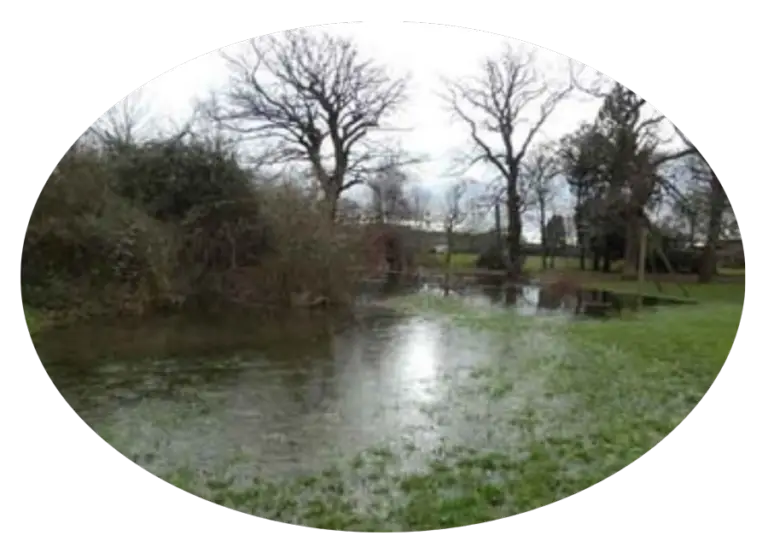
In Nowhere Wood close to the footpath cross road is a seasonal pond. This pond is situated in one of the old excavations in the quarry. It is known as the Seasonal Pond as it often dries out in the summer. It is fed, in part, from an overflow pipe from another pond on private land nearby. Despite the ephemeral nature of the pond it is home to leeches, eels and some aquatic plants.
Orchard
Near the Avening Close access point alongside the boundary with Nailsea Croquet Club is an area of orchard that is managed to allow fruit trees and wild flowers to thrive. The grass in the orchard area is not regularly mown, this encourages grasses, wild flowers, insects, birds and small mammals. The uncut grass and flowers can be very attractive in the summer and autumn.
Rewilding and Wild Flower Meadows
The drive for food security during and after the Second World War caused Government policies to incentivise food production from the land. That resulted in intensive farming practices with wide spread use of fertilisers and insecticides, creation of monoculture environments and pushed marginal land into food production. Farming is not the only reason for biodiversity decline, other factors such as industrial pollution, climate change, urban development, etc. also play a part. The result is that the UK has one of the worst biodiversity declines in the world. Older readers will remember how car windscreens had to be frequently cleaned during summer journeys due to the number of insects colliding with the car, something that is much less frequent these days. There has been a reduction of 60% of the number of flying insects during just the last 20 years, although the overall decline in numbers started much earlier.
Why does this matter? Insects are a key part in the fabric of life, helping to break down dead and decaying matter and being food for many other species. They are also pollinators of plants, including the crops we depend on. If we lose the pollinators food production will crash. Insects are critical to our survival and the Government has published a Biodiversity Action Plan; it is that important.
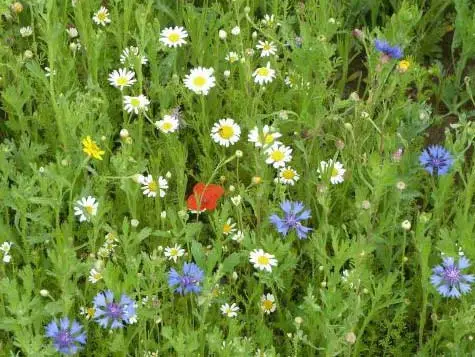
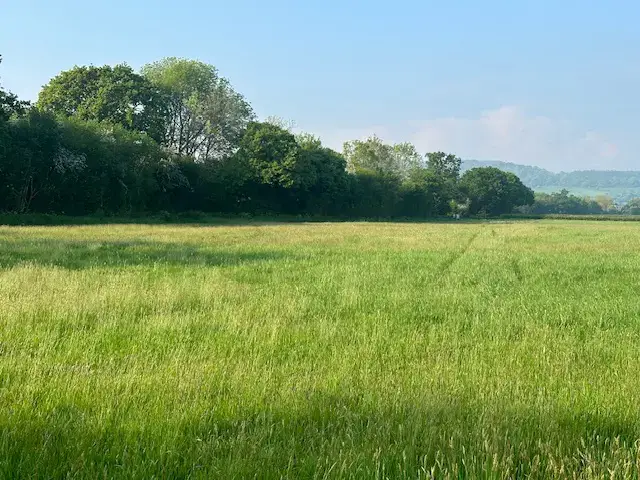
To enhance the biodiversity in the park a number of areas within the park are being managed to increase both the quality and range of natural environments. The objective is to improve the habitat for plants, insects, birds and animals that use the park. Friends of Trendlewood Park have created several areas of wild flower meadows, sown other areas with wild flower seeds, planted trees and agreed with North somerset Council that some strips of land can left with only minimal intervention. These areas can both look wonderful when in bloom but also appear wild and unmanicured out of season, but they are more natural. Nature loves varied and scruffy landscapes but hates tidy and manicured places. They may look neglected and not like a typical urban park, however, this is intentional management and is encouraging nature to recover for the greater good. Think of them as small insurance policies for the future of your children.


Kenn Hedge
The Kenn Hedge grows along side the River Kenn on the eastern boundary of Nailsea. This stretch of the park has two footbridges that cross the River Kenn to access public footpaths through the adjoining farmland.
Much of the park alongside the Kenn Hedge includes a public footpath and a Bridleway. Parts of the path have a hard surface but these do not form a continuous route. In damp weather sections of the path become very muddy and not suitable for pushchairs or wheelchairs.
The Kenn Hedge supports a range of bushes and trees with flowering plants beneath them. Blossoms and flowers here can be very pretty. The Kenn Hedge is an important foraging zone for bats. A walk at dusk will often find bats swooping and darting about the hedge. Bring a bat detector with you if you want to identify the species of bat that dart quickly past you.
The Old Farm House
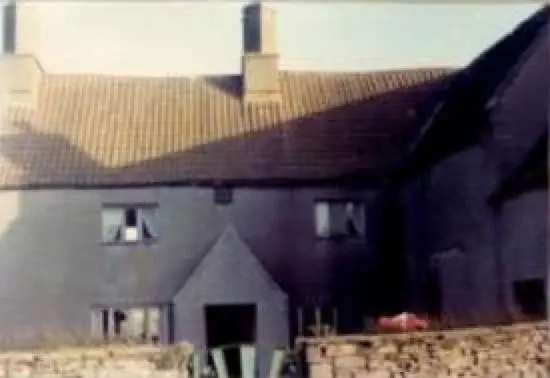
There is a small section of the park running alongside Chelvey Rise next to the Old Farm House public house. Some of the park was originally part of East End Farm, a dairy farm, before the land was sold to developers in 1984. Trendlewood Community Park does not have any cafes or similar facilities of its own. However, if you are in need of refreshment or food in pleasant surroundings the Old Farm House public house is a good place to visit.
The parkland here follows the route of a stream which was buried in a culvert during the development of the Trendlewood Estate. This explains the shallow valley. There are two footpaths, one along each side of the valley, they are not surfaced and can be very slippery when damp. There is a public footpath on the far side of Trendlewood Way that connects this part of the park to the rest of the park. The trees in the valley and the undergrowth are being allowed to develop with limited management to encourage a green wildlife corridor from the Kenn Hedge area to the rest of the park.